Our Little Cabin
First Impressions: Warm, Intimate, and Thoughtfully Composed
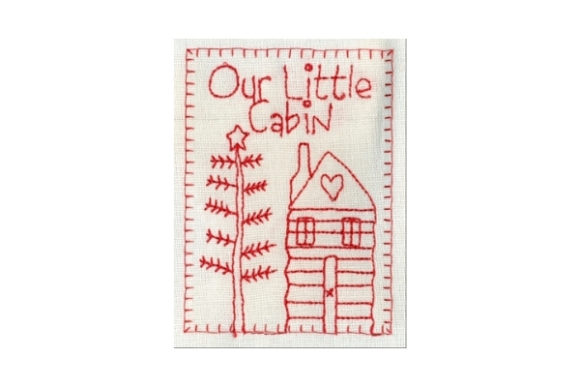
As an embroidery designer who’s stitched over 300 boutique apparel drops—from linen tees to heavyweight fleece—I opened Our Little Cabin expecting charm. What I found was something more intentional: a quiet narrative in thread. The layout feels centered but not rigid—like a hand-drawn sketch gently translated into stitch. There’s no forced symmetry; instead, soft rooflines, subtle smoke curling from the chimney, and tiny window details suggest warmth without clutter. It’s not overly detailed, yet it avoids minimalism-by-accident. This is *curated* simplicity—rustic enough for a mountain lodge postcard, gentle enough for a child’s holiday sweater.
How It Lives on Sweatshirt Fabric
Our Little Cabin thrives on texture. On neutral heather grey or oatmeal sweatshirts, the design reads as cozy and grounded—ideal for a boutique brand leaning into slow-holiday aesthetics. On deep charcoal or navy fleece, it gains quiet sophistication; the contrast lets each satin-stitched roofline and fill-stitched door pop without shouting. Pastel blush or mint hoodies? Surprisingly effective—the design’s organic shape softens further, leaning into gentle, feminine storytelling rather than overt Christmas cliché. And yes—it scales beautifully. At 3.5" wide (a common chest placement), the cabin holds clarity. At 4.75" on the back of an oversized hoodie? It becomes a focal point that invites touch, not just glance.
Placement Matters—And This Design Knows It
This isn’t a “throw-it-anywhere” machine embroidery design. Our Little Cabin shines strongest at chest level—left or right side—on crewnecks and pullovers. Its horizontal emphasis anchors the garment visually without competing with pockets or zippers. As a sleeve accent? Trimmed down to 2.25", it adds whimsy without overwhelming proportion. For back designs, it works best when paired with simple typography (“Our Little Cabin • Est. 2024”) or left solo as a quiet signature. It also translates well to printable mockups—its balanced negative space means clean shadows and natural fabric drape in lifestyle photography, which is gold for Etsy sellers needing scroll-stopping visuals.
Stitch Personality & Real-World Embroidery Concerns
The stitching feels generous—not dense, not sparse. You can tell this was digitized for breathability on knits. That’s critical: too much fill density on fleece leads to puckering; too little, and the design disappears after wash. Our Little Cabin lands in that sweet spot where satin borders define shape, and open-fill areas let the fabric show through. No tiny, fragile elements—no starbursts, no micro-lettering, no thread-trap corners. That means fewer thread breaks during commercial embroidery runs and better durability across repeated cold washes.
Thread color choice makes or breaks it. On dark fabric, go warm: toasted tan for the roof, creamy ivory for snow, muted forest green for pine accents. On light fabric, lean into contrast—charcoal grey roof, deep burgundy door, soft sage evergreens. Avoid high-saturation reds or electric blues—they’ll clash with the design’s inherent calm. And yes—stabilizer matters. A medium-weight cutaway works best under the hoop for sweatshirt embroidery, especially with heavier fills. Tear-away may shift on stretchy fleece; iron-on film alone won’t hold long-term wear.
Brand Impact Beyond the Stitch
For small shop owners and Etsy sellers, Our Little Cabin isn’t just decoration—it’s brand language made tactile. It signals intentionality: handmade product, seasonal care, quiet joy. Customers don’t buy “a cabin”—they buy belonging, nostalgia, a pause in the rush. That emotional resonance lifts perceived value. A $68 sweatshirt with Our Little Cabin stitched cleanly reads as premium; the same blank sweatshirt reads as commodity. It builds visual recognition fast—repeat buyers start spotting the silhouette before they read your shop name. And because it’s versatile across gendered and age-neutral fits, it supports inclusive custom apparel without needing multiple SKUs.
What You’ll Want to Confirm Before Production
- Hoop size: Check the included embroidery file specs—this design likely fits comfortably in a 4x4 or 5x7 hoop, but verify before nesting multiple units.
- File formats: Since it comes with multiple embroidery file formats, confirm compatibility with your machine (e.g., .dst, .pes, .jef) and software stack.
- Licensing: Review usage terms—especially if you plan bulk production or resale as part of a boutique brand collection.
- Small-size readability: If offering youth sizes or cropped styles, test the smallest recommended dimension on actual fabric—some delicate details may soften below 2.75".
Final Thoughts for the Creative Entrepreneur
Our Little Cabin doesn’t try to be everything. It doesn’t shout “Christmas!”—it whispers “home.” That restraint is its strength. In a market saturated with glittery reindeer and bold slogans, this machine embroidery design offers breathing room. It pairs effortlessly with natural fibers, earth-toned palettes, and unstructured silhouettes—core pillars for modern boutique brands. It photographs beautifully in candlelit flat lays and snowy backyard shots alike. And because it avoids trend-driven motifs, it won’t feel dated by January. It’s built for longevity—both in wardrobe rotation and brand evolution.
If you’re curating a limited holiday drop—or building a year-round cozy apparel line—Our Little Cabin earns its place not as filler, but as foundation. It’s the kind of embroidery file that turns a good sweatshirt into a keepsake, a digital embroidery file into a tactile memory, and a small shop product into something customers choose again—not because it’s festive, but because it feels true.