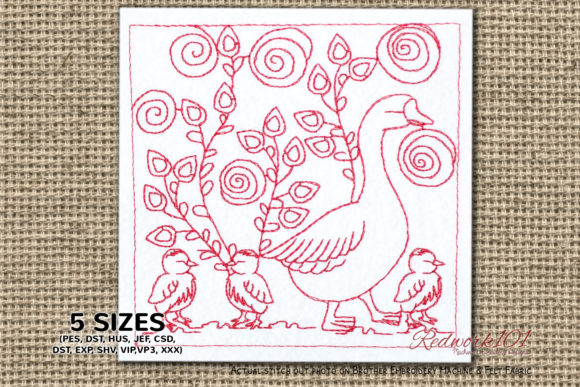
Duck with Ducklings
A Playful Yet Polished Embroidery Design for Small Business Branding
As an embroidery designer who’s developed hundreds of commercial designs for cafés, boutiques, florists, pet brands, and handmade studios, my first impression of Duck with Ducklings is immediate and positive: it’s warm, approachable, and unmistakably human-centered. The title alone signals gentle charm—not cartoonish, not overly stylized, but grounded in a quiet, pastoral elegance that fits seamlessly into the Paisley category’s tradition of organic flow and handcrafted nuance. It doesn’t scream “trendy”; it invites trust. That’s gold for small business merch.
Where Duck with Ducklings Shines in Real Business Use
This machine embroidery design performs exceptionally well across high-impact branded applications—especially where authenticity and emotional resonance matter more than flash. Think apron embroidery for a neighborhood bakery, chest patches for a pet-sitting service, or sleeve accents on staff uniforms at a flower shop. Its balanced proportions and clear silhouette translate beautifully to embroidered patch format—ideal for attaching to tote bags, denim jackets, or reusable produce sacks sold at local markets.
Duck with Ducklings also works smartly on curved surfaces like cap fronts and structured tote bag handles, provided the layout accounts for natural fabric distortion. I’ve used similar motifs on custom apparel for Etsy sellers launching handmade product lines—and customers consistently report that the design makes their packaging feel “thoughtfully finished,” not mass-produced. As a tote bag design, it adds narrative without clutter; as a cap embroidery accent, it softens corporate rigidity while reinforcing brand warmth.
For creative studios and craft businesses, this digital embroidery file pairs effortlessly with other design assets—say, alongside minimalist typography or botanical line art. It supports visual consistency without demanding uniformity. And because its charm lies in simplicity—not hyper-detail—it scales gracefully from 2-inch patches to 4-inch appliqué placements on aprons or market banners.
Smart Placement & Practical Limits
That said, Duck with Ducklings isn’t universally bulletproof. Avoid using it below 1.5 inches in height unless you’ve verified stitch clarity at that scale—tiny ducklings can blur or merge on dense fabrics or low-thread-count cottons. Cap fronts under 2.25 inches may require simplification (e.g., omitting subtle feather texture or reducing inner detail) to preserve legibility after stitching.
Be especially thoughtful on dark uniforms or textured fabrics like canvas or terry cloth. High stitch density in the duck’s body could flatten on heavy weaves—or create unintended shadowing if thread colors lack sufficient contrast. Always test Duck with Ducklings in black and white first: does the shape hold? Do negative spaces breathe? Does the duckling grouping remain distinct? These aren’t aesthetic nitpicks—they’re production safeguards.
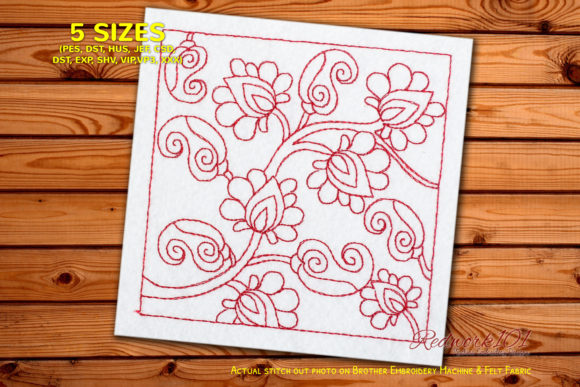
The note about “The Box Stitch shown in the picture is optional” is a quiet but critical cue. That outer frame isn’t just decorative—it affects hoop size, stabilizer choice, and final bulk. For flat, lightweight patches (think boutique gift tags or keychain accents), the box adds polish. For curved cap embroidery or stretchy knit tees, skip it entirely unless your digitizing adjusts for tension and flex.
How Duck with Ducklings Strengthens Brand Identity
In small business branding, consistency isn’t about repetition—it’s about resonance. Duck with Ducklings reinforces professionalism not through formality, but through intentionality. A florist using it on staff aprons signals care—not just for flowers, but for how people *feel* when they walk in. A pet brand placing it on customer thank-you totes implies nurturing, reliability, and quiet joy. That emotional shorthand builds recognition faster than any slogan.
It also elevates perceived product value. Handmade products gain credibility when paired with refined, cohesive embroidery—not generic clip art. Customers subconsciously associate clean stitch work, balanced spacing, and thoughtful color contrast with quality craftsmanship. And because Duck with Ducklings avoids overused clichés (no winking animals, no forced puns), it feels authentic—not like marketing, but like identity.
Essential Embroidery Designer Notes Before Production
- Test before commit: Run a black-and-white stitch-out first to verify outline integrity and spacing between ducklings.
- Scale wisely: Confirm it reads clearly at your smallest intended patch size—especially if ordering pre-made embroidered patches.
- Thread colors matter: Choose high-contrast combinations for dark fabrics; consider matte vs. glossy threads depending on garment texture.
- Hoop size & stabilizer: Match stabilizer weight to fabric type—cutaway for knits, tear-away for stable wovens. Check if the design’s outer dimensions fit your standard hoops.
- Fabric first: Stitch a sample on your actual garment or patch material—not just blank muslin. Thread behavior changes drastically on real substrates.
- Mock it up: Create a printable mockup for client approval. Visual context (e.g., Duck with Ducklings on a navy apron) prevents misalignment later.
- Compare assets: Lay Duck with Ducklings beside your logo, typography, and other design assets. Does it harmonize—or compete?
- Licensing check: Verify commercial use rights before applying to merchandise for resale. Not all digital embroidery files include full commercial embroidery permissions.
Ultimately, Duck with Ducklings isn’t just another embroidery file. It’s a versatile, emotionally intelligent tool—one that helps small businesses communicate care, continuity, and character without saying a word. Whether stitched onto a barista’s apron, a florist’s tote, or a pet brand’s bandana, it turns functional items into quiet ambassadors of brand voice. And in today’s crowded marketplace, that kind of subtle strength is exactly what makes merchandise memorable—and customers return.